Mold Damage Repair in Arvada, CO
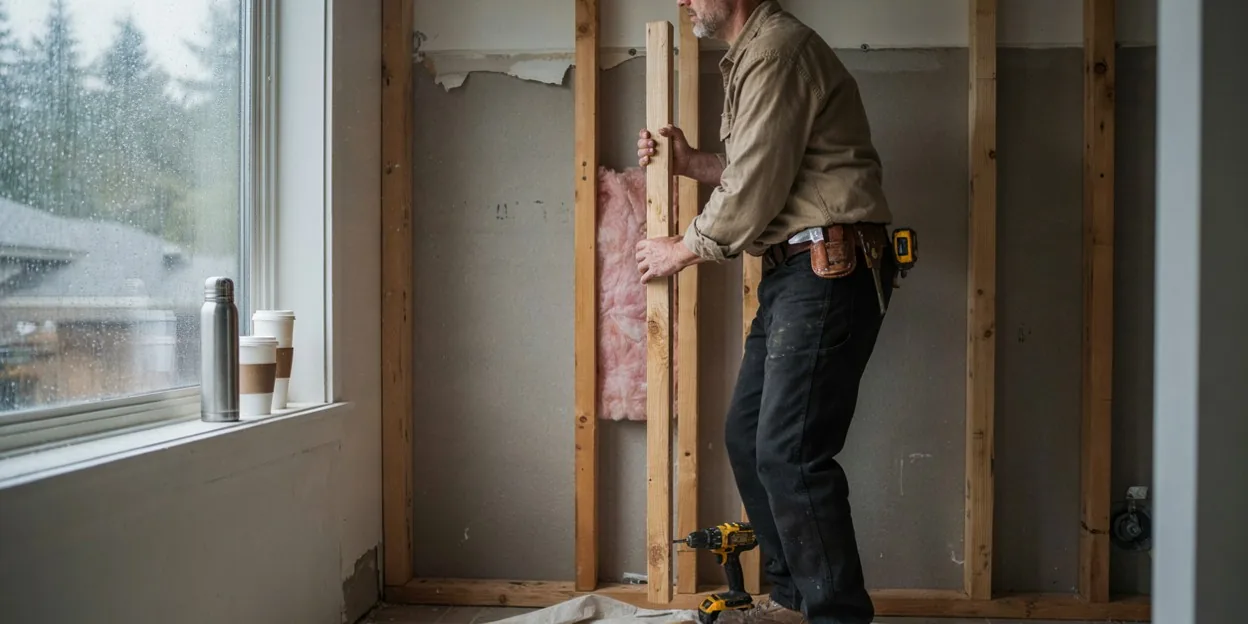
The removal crew left the basement family room open to the studs along two walls, with the bottom two feet of drywall gone, the carpet rolled back, and the pad in bags by the curb. The moisture log says the framing is dry. The foundation company has injected the crack and the new sump pump is in. Now the room has to become a room again. This site connects you by phone with an independent local provider who does mold damage repair in Arvada and across Jefferson County.
Confirming dry wood and a fixed source before the first sheet goes up
Rebuild starts with a reading, not a delivery of drywall. The crew meters the studs, the bottom plate, and the slab along the opened walls and compares them to the removal crew's log. They look at the crack repair, the window well, the pump, or the pipe that caused the loss and ask for the invoice, because new drywall over an unfixed source is the same job again next spring.
They also look at what the removal left: whether the cut line is straight enough to patch or whether whole sheets make more sense, whether the carpet can be relaid over new pad or has to go, and whether the bottom plate was sistered and needs furring to take drywall flat.
Keep the room open, keep the dehumidifier running, hold the carpet
Do not close the walls to make the room look better for a weekend; the framing wants the air. Keep the dehumidifier running if the removal crew left one, and keep the carpet rolled back with the slab bare. Save every invoice from the plumber, the foundation company, and the removal crew in one folder for your adjuster.
If the removal crew wrote the rebuild scope, read it before the repair provider arrives so you can ask about each line. If a different company is doing the rebuild, make sure both scopes describe the same walls.
Insulation, drywall, texture, trim, and floor in that order
Fiberglass or foam insulation goes back into exterior stud bays, with a vapor retarder detailed the way the local code wants it below grade. Drywall is hung to the cut line or in full sheets, taped, and finished to match the texture on the rest of the wall, which in Arvada basements is usually knockdown or orange peel. Baseboard, door casing, and any paneling are replaced and primed, then the room is painted.
New pad goes down last, the original carpet is stretched back in if it was saved and cleaned, or new flooring goes in. Cabinet bases in a laundry or a basement kitchen that were pulled are rebuilt or replaced. If the rebuild uncovers damp wood the removal crew did not reach, the work stops and goes back to mold removal. Equipment in a furnace room that was in the wet zone is HVAC mold cleaning. A room that still smells after the rebuild is mold odor removal.
Finished basements, egress wells, and what Arvada's permit desk wants to see
Arvada basements were finished in waves: the 1950s and 1960s ranches around Olde Town got paneling and drop ceilings in the 1970s, the split-levels of Lake Arbor and Meadowglen were drywalled in the 1980s, and the two-stories in West Woods, Candelas, and Leyden Rock were often finished by the builder with bedrooms and egress window wells. A rebuild in a basement bedroom has to keep the egress well and window to current code, and a rebuild that moves an outlet or a drain line needs a City of Arvada permit and an inspection before the drywall closes.
Colorado has no mold license, so the removal side is a trade the provider represents its own training in; the rebuild is contractor work licensed by the city, with plumbing and electrical licensed by the state. Most Colorado homeowner policies pay to rebuild after a covered sudden loss and apply a separate mold cap to the removal, so keep the two scopes and the two invoices distinct for your adjuster.
Calling about a basement that is still studs and plastic
Have the address, which rooms are open, when the removal finished, and whether the source has been repaired and by whom. Say whether the carpet was saved and whether the room is a bedroom with an egress well. Call (720) 823-6943.