Attic Mold Remediation in Arvada, CO
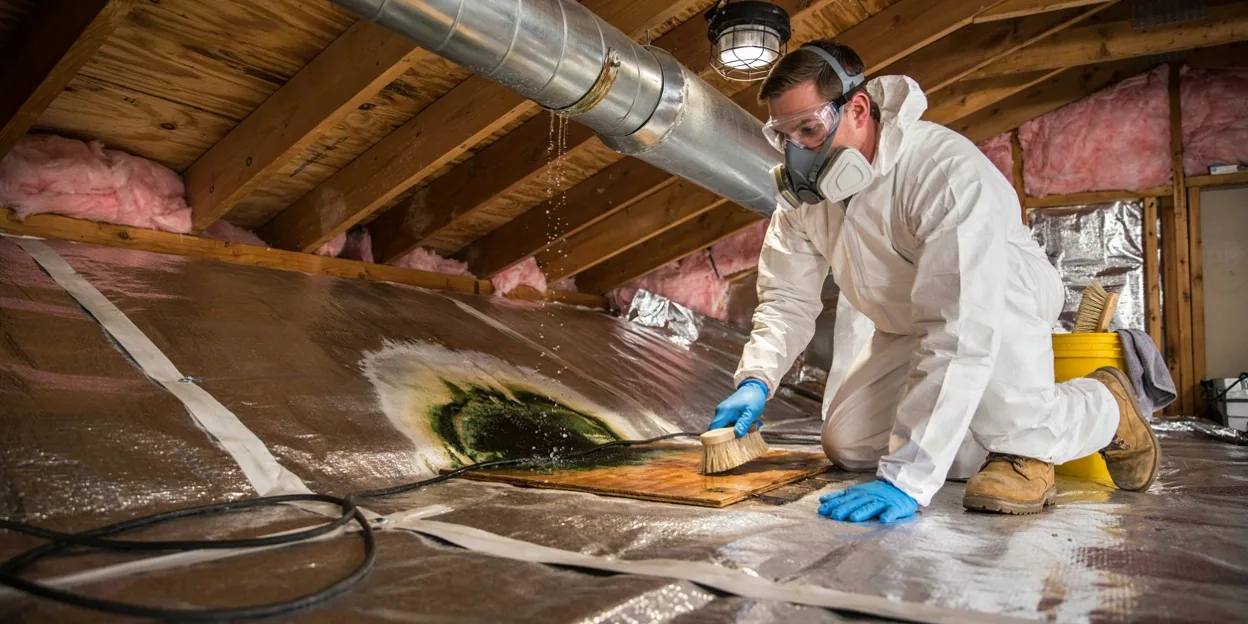
A home inspector put a flashlight through the attic hatch and came down with photos of black and gray streaking on the underside of the sheathing along the north slope, frost marks on the nails, and a bathroom fan duct that stops a foot short of anything. The roof was replaced after the hail two summers ago, so you assumed the attic was fine. This site connects you by phone with an independent local provider who does attic mold remediation in Arvada and across Jefferson County.
Hail leaks, ice dams, and fans that vent nowhere
The crew goes up with a meter and a light and reads the sheathing, the rafters or truss chords, and the top of the insulation under every stain. They trace each streak uphill to its source, and in an Arvada attic there are three usual ones. A hailstorm cracked shingles or split a vent boot, and water came in at that spot until the roof was redone. An ice dam built up at the eave in February, and meltwater backed under the shingles and ran down the inside of the sheathing. Or a bathroom fan, a dryer, or a kitchen hood vents into the attic, and the north slope grows frost every cold night and thaws every morning.
They also check the soffit and ridge vents, because an attic that cannot breathe condenses moisture on the cold side even with no leak at all. The crew tells you which of these you have before anything is cleaned, and which trade fixes it.
Leave the insulation in place and get the fan ducted outside
Do not pull the insulation out yourself. It is the material most likely to be holding growth, and hauling it through the house without containment spreads it. Photograph the streaks and the fan duct from the hatch, and note which slope the staining is on; north and east slopes point to condensation, a single spot under a vent points to a leak.
If the roof was replaced after hail, find the roofer's invoice and photos; your adjuster may want them. Get the bath and dryer fans ducted through the roof or a gable before the crew comes, or the attic grows the same frost next winter.
Sheathing cleaned and treated, wet insulation out, hatch sealed while it happens
The hatch or scuttle is sealed with plastic and a HEPA scrubber runs in the attic so dust does not fall into the hallway below. Insulation under the stained areas goes into bags and out through the hatch inside the containment. The sheathing, rafters, and truss chords are HEPA vacuumed and cleaned, and where the growth has gone into the grain they are sanded or media-blasted, then treated. Sheathing that has delaminated from a long leak is replaced from the roof side, which is roofing work.
New insulation goes in once the wood reads dry and the venting is fixed. A ceiling that stayed wet below a leak comes out from the room side; see mold removal. A bathroom that fed the attic through a short fan duct is covered under bathroom mold removal. Replacing ceiling drywall and texture is mold damage repair.
Baseball hail, February ice, and low-slope roofs over 1960s ranches
Arvada roofs take hail most summers, and two storms set the pattern: the May 8, 2017 supercell that dropped baseball-size stones across Arvada, Wheat Ridge, Lakewood, and Golden and drove tens of thousands of homeowner claims, and the June 2023 storms that followed the wettest spring in years. A roof opened by hail leaks into the attic until it is redone, and the attic nobody enters keeps the stain.
Winter adds ice dams. The brick ranches of Lamar Heights, Alta Vista, and Hackberry Hill have low-slope roofs, shallow attics, and eaves that freeze while the ridge stays warm, so meltwater backs under the shingles in a February thaw. Bath fans added to those houses in the 1980s and 1990s often end in the insulation. Colorado has no mold license; the provider represents its own training, roofing is licensed through the City of Arvada, and a hail leak is usually a covered loss while the mold that follows may sit under your policy's mold cap.
When you call about streaks on the sheathing
Have the address, when the roof was last replaced and why, which slope the staining is on, and where the bath and dryer fans go. Say whether the insulation is still damp and whether a roofer has been up since the last storm. Call (720) 823-6943.